
Top Mobile App Development Companies for Startups: Our 20 Picks



It takes a lot more than great coding skills to build a mobile app that will actually succeed in the market. That’s why the startup app development companies worth the investment go beyond coding. They help startups:
- Validate the idea
- Prioritize features
- Check technical feasibility
- Understand trade-offs
- Make the most out of a limited runway.
As a trusted startup product development partner, we know first-hand that there’s more to a successful startup partnership than excellent tech skills. That’s why we decided to prepare this guide. Keep on reading to discover:
- 20 app development companies for startups that belong on your to-consider list
- Their tech stacks, services, core strengths, and best-fit projects
- What to consider before picking the partner
- Mistakes to avoid when hiring a mobile app development company
Top 20 Mobile App Development Companies for Startups: Your Snapshot
Before we begin, here’s a quick recap of what you should know about the 20 best mobile app development companies for startups listed below:
20 Best Mobile App Development Companies for Startups
Ready to dive into each company’s profile in more detail? Here’s what makes each of these 20 top mobile app development companies for startups stand out.
1. Darly Solutions: Best for First-Time Healthcare & Fintech Founders
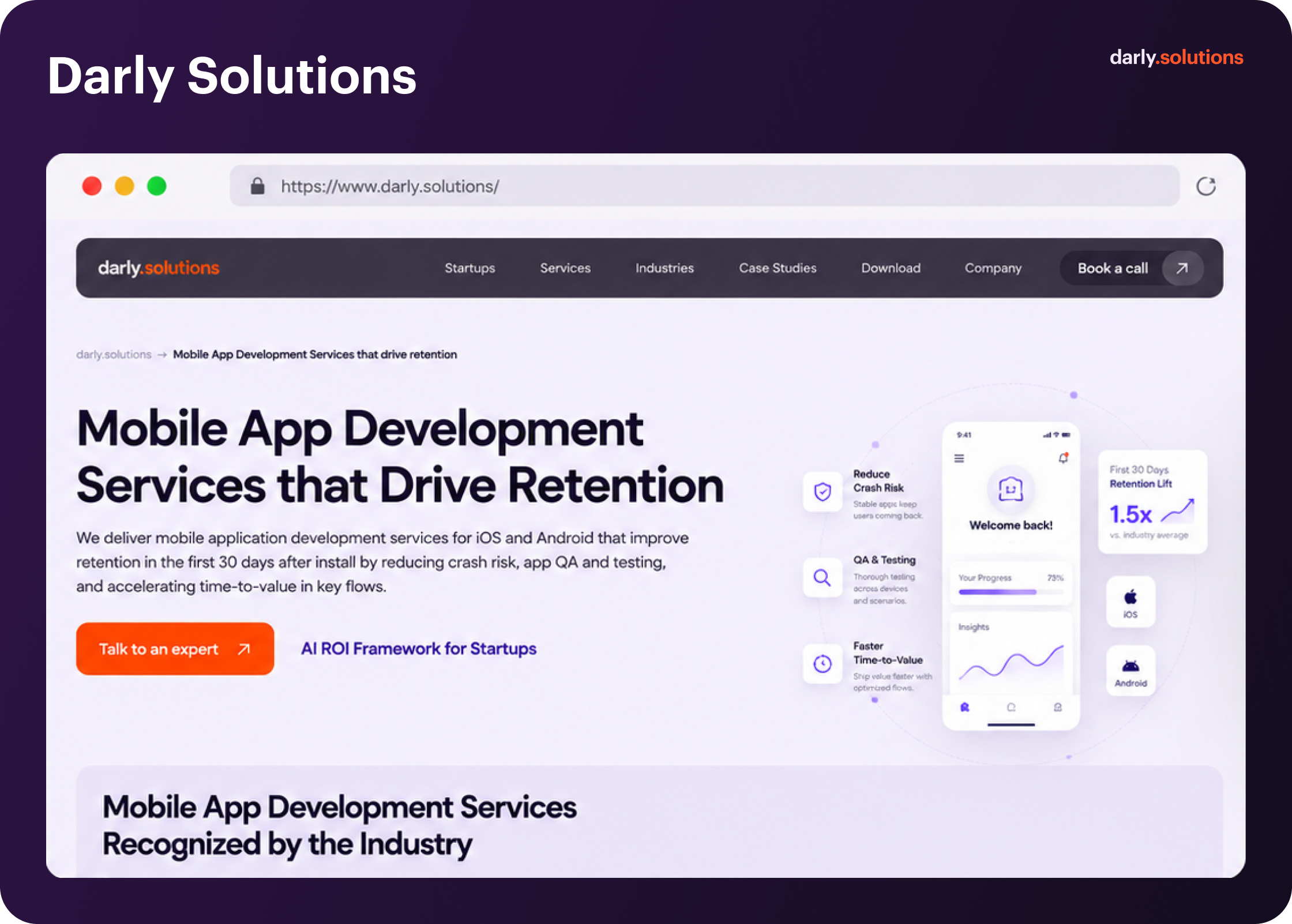
Company overview: Since 2016, Darly Solutions has been a trusted partner for custom web, AI, and mobile app development for healthcare, fintech, SaaS, and manufacturing businesses.
Best for: Pre-seed and seed-stage healthcare, fintech, and SaaS startups.
Mobile expertise:
- Native: Kotlin, Objective-C, Swift, Java
- Cross-platform/hybrid: Flutter, React Native, Capacitor, Ionic, Redux, Angular
Startup experience: Darly Solutions has a proven track record in custom mobile app development for startups in healthcare, fintech, retail, logistics, and MarTech. In fact, most of the company’s case studies involve startups. On Clutch, the company holds a 5.0 rating, with clients most often highlighting timely delivery and clear communication.
What stands out: Healthcare (telemedicine, digital health, HIS) and fintech are Darly Solutions’ strongest verticals. The team also offers a full range of services for pre-seed startups (product discovery, PoC, MVP development, scaling).
Potential limitations: Darly Solutions has delivered enterprise-scale projects, but experience with Series D+ startups remains limited.
Ideal engagement: Product discovery, PoC, and MVP development for first-time founders.
2. Designli: Best for a Quick Cross-Platform Launch on React Native
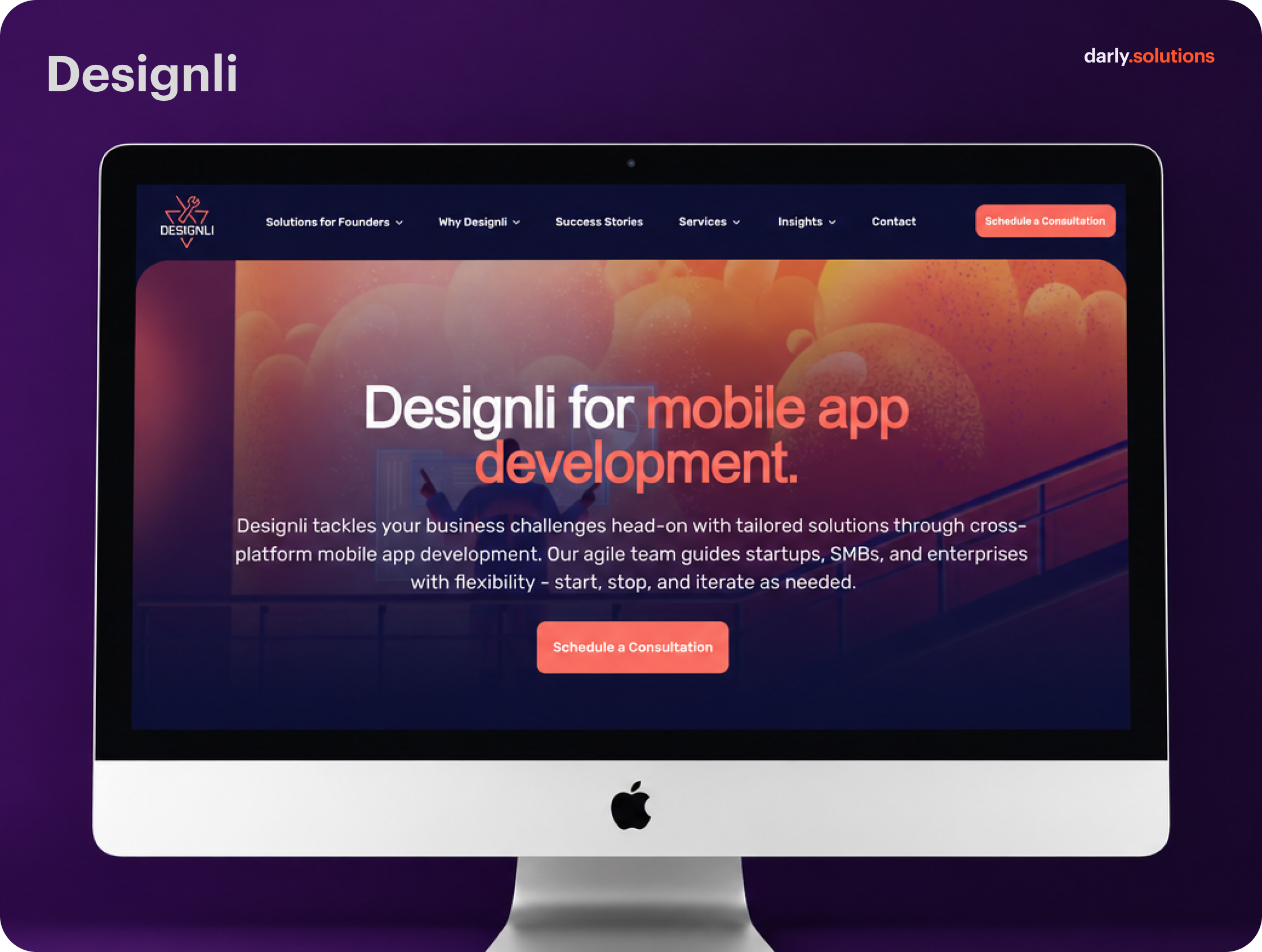
Company overview: Designli is a startup app development agency that targets non-technical founders and has an established React Native-based tech stack for mobile apps.
Best for: Pre-seed startups that need to launch a mobile app pronto.
Mobile expertise:
- Cross-platform: React Native
Startup experience: Designli’s case studies showcase its experience with startup projects in logistics, recruitment, personal finance, and personal development.
What stands out: Designli promises to put a live app on the market within 30 days and have it earn the first dollar by day 90 if you’re starting from scratch.
Potential limitations: Designli works only with one cross-platform technology and offers no native startup app development services.
Ideal engagement: React Native mobile app development.
3. Goji Labs: Best for Product Strategy Advisory
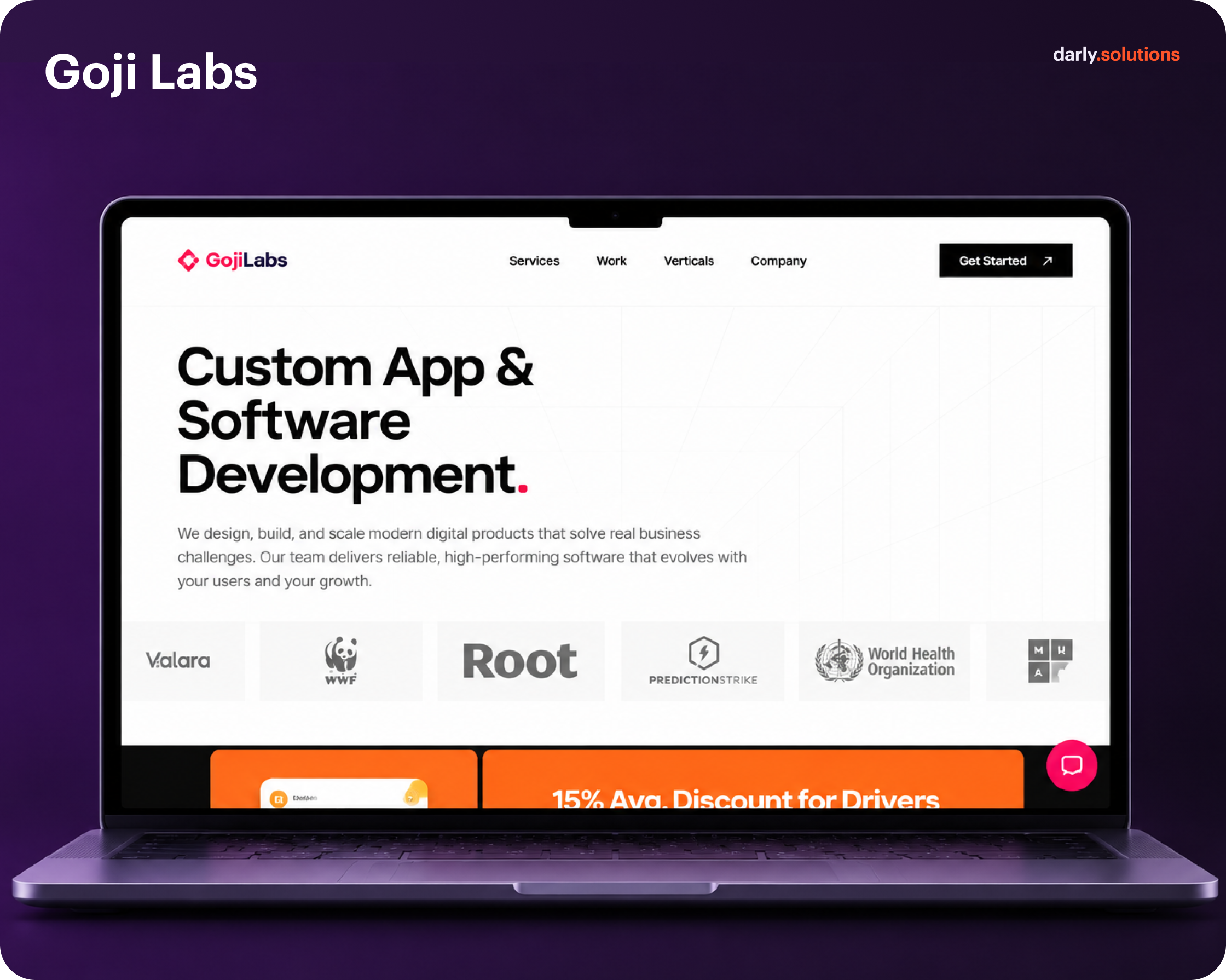
Company overview: Goji Labs is a startup product development company that’s been serving large-scale enterprises, innovative startups, and SMBs alike since 2014.
Best for: Growth-stage startups (Series B/C) in need of a product strategy advisor.
Mobile expertise:
- Native: Kotlin, Swift
- Cross-platform: React Native
Startup experience: Goji Labs’ portfolio mostly highlights its work with large enterprises and established companies. That said, the company has also worked with startups in digital wellbeing, eCommerce and retail, and finance.
What stands out: Goji Labs puts strategy first when collaborating with startups — and, according to its website, has helped its clients raise over $1 billion in funding.
Potential limitations: The tech stack is somewhat limited for cross-platform apps. The company’s typical project costs $50,000 to $199,999, according to Clutch.
Ideal engagement: Project takeover or product strategy consulting.
4. Fueled: Best for Series D+ Product Development
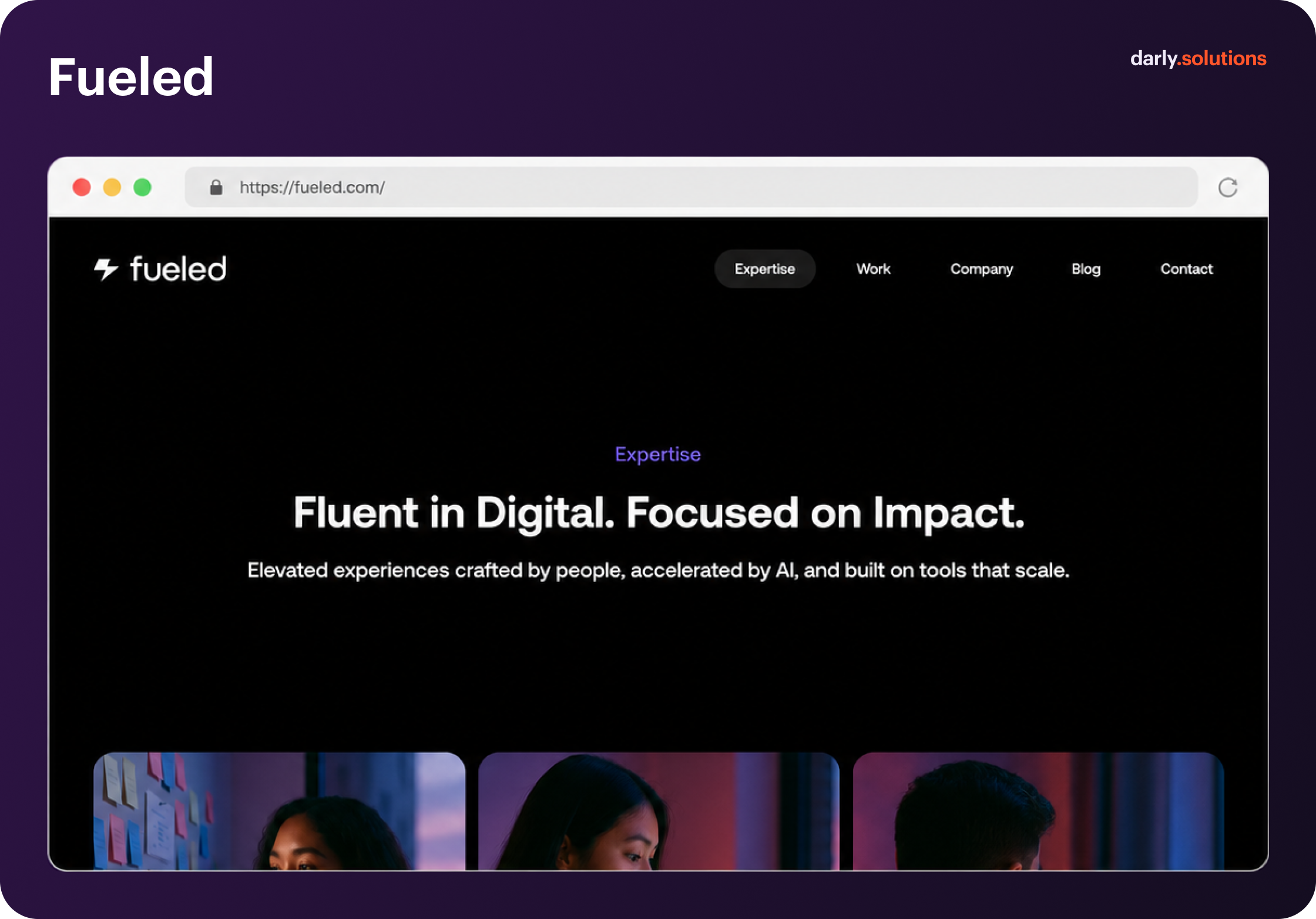
Company overview: Fueled is a digital agency that advises world-famous brands on product development — and builds innovative products for tech startups with unicorn potential.
Best for: Series D+ tech startups that need a premium product development and strategy partner.
Mobile expertise:
- Cross-platform: Flutter
Startup experience: Fueled has worked with big-name brands, but it’s also helped startups grow into unicorns and launch IPOs. You can check out its CLEAR case study as an example.
What stands out: Fueled has an impressive track record in media and publishing, public sector, higher education, financial services, and big tech.
Potential limitations: Fueled’s typical mobile app development project costs between $200,000 and $999,999, according to Clutch. You may want to discuss your tech stack with Fueled reps since the website lacks information.
Ideal engagement: PoC development for innovative products; growth strategy and managed services for Series D+.
5. Cheesecake Labs: Best for Fast-Growing Startups
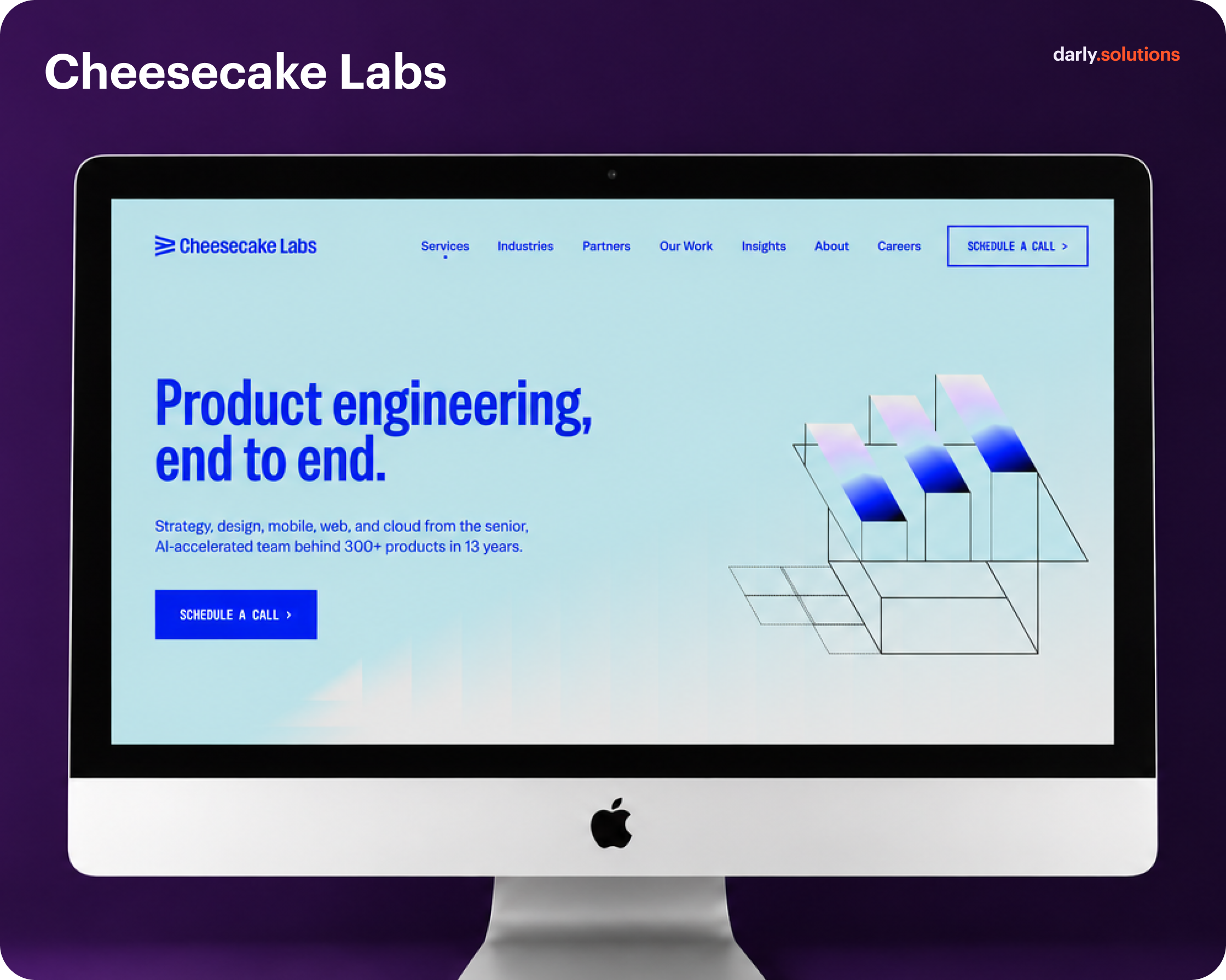
Company overview: Cheesecake Labs is a mobile app development company for startups that specializes in AI, data, and analytics.
Best for: Fintech and healthcare startups in the growth stage (Series B/C).
Mobile expertise:
- Native: Android, iOS
- Cross-platform/hybrid: React Native, Flutter, Go
Startup experience: Cheesecake Labs’ portfolio focuses on application modernization and scaling fintech and healthcare apps. The company also has a strong track record as a mobile app development partner for Web3 and IoT startups.
What stands out: Cheesecake Labs has partnerships with AWS, Google Cloud, Databricks, Snowflake, and Anthropic. Its office in Brazil is only one hour ahead of the U.S. East Coast.
Potential limitations: Check in with Cheesecake Labs regarding the tech stack; the website doesn’t offer detailed information.
Ideal engagement: Embedded teams for ad hoc senior expertise; AI-accelerated delivery for a quick time-to-market.
6. Rootstrap: Best for Product Rework or Rebuild
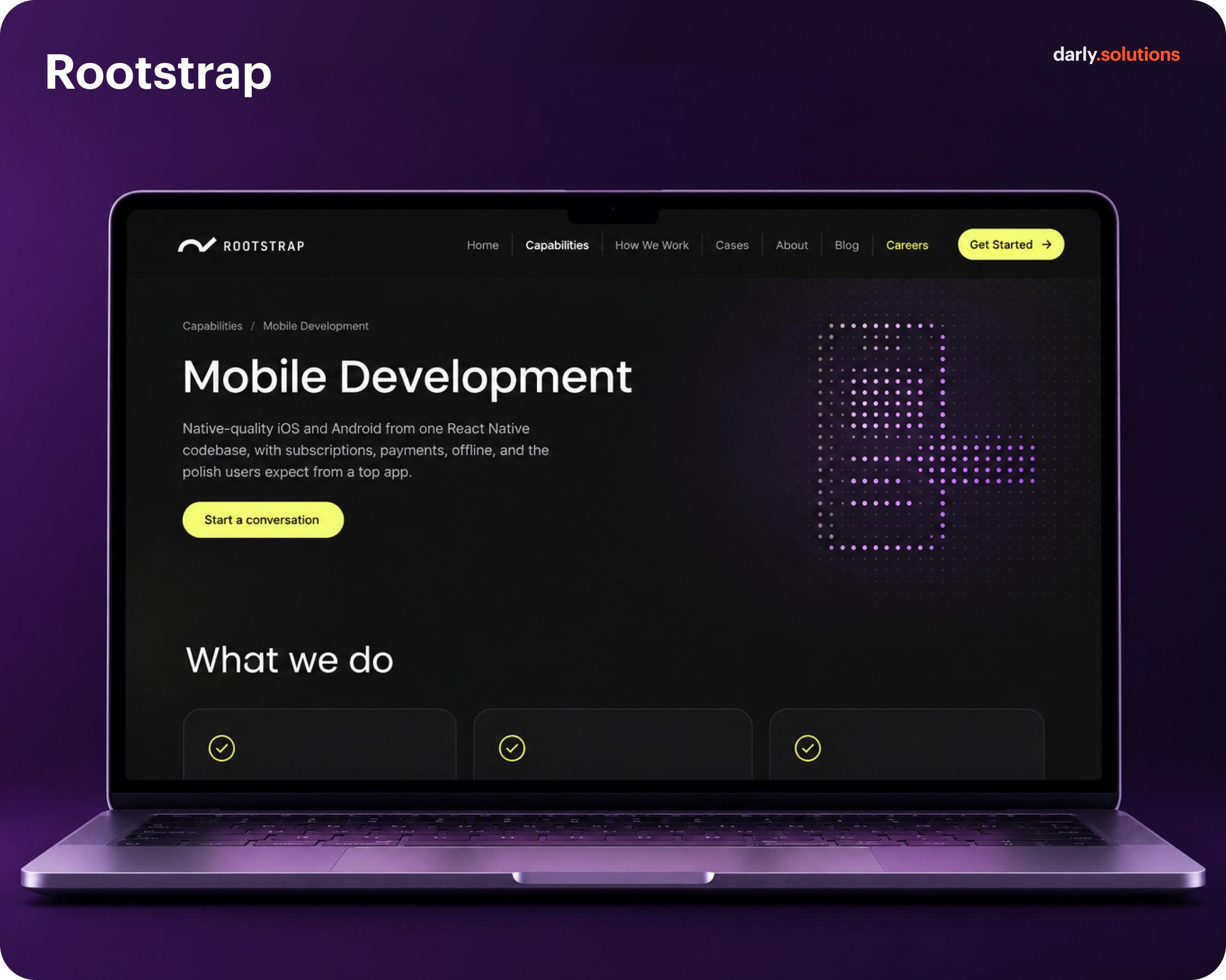
Company overview: Rootstrap brings together startup mobile app developers across four countries in the Americas — and also implements AI, cloud, and data solutions.
Best for: Growth-stage startups that need a product rebuild.
Mobile expertise:
- Native: Swift, Kotlin
- Cross-platform: Firebase, Flutter, React Native, Expo
- Wearables & IoT
Startup experience: Rootstrap has a commendable track record in rebuilding existing retail and commerce products to help them scale.
What stands out: Rootstrap clearly lists the must-haves it includes in every mobile app: offline-first data, secure authentication, in-app transactions, and analytics.
Potential limitations: The company’s native app development experience seems to be somewhat limited.
Ideal engagement: Product modernization and AI-accelerated staff augmentation for live solutions.
7. Netguru: Best for Kotlin Multiplatform Retail/eCommerce Apps
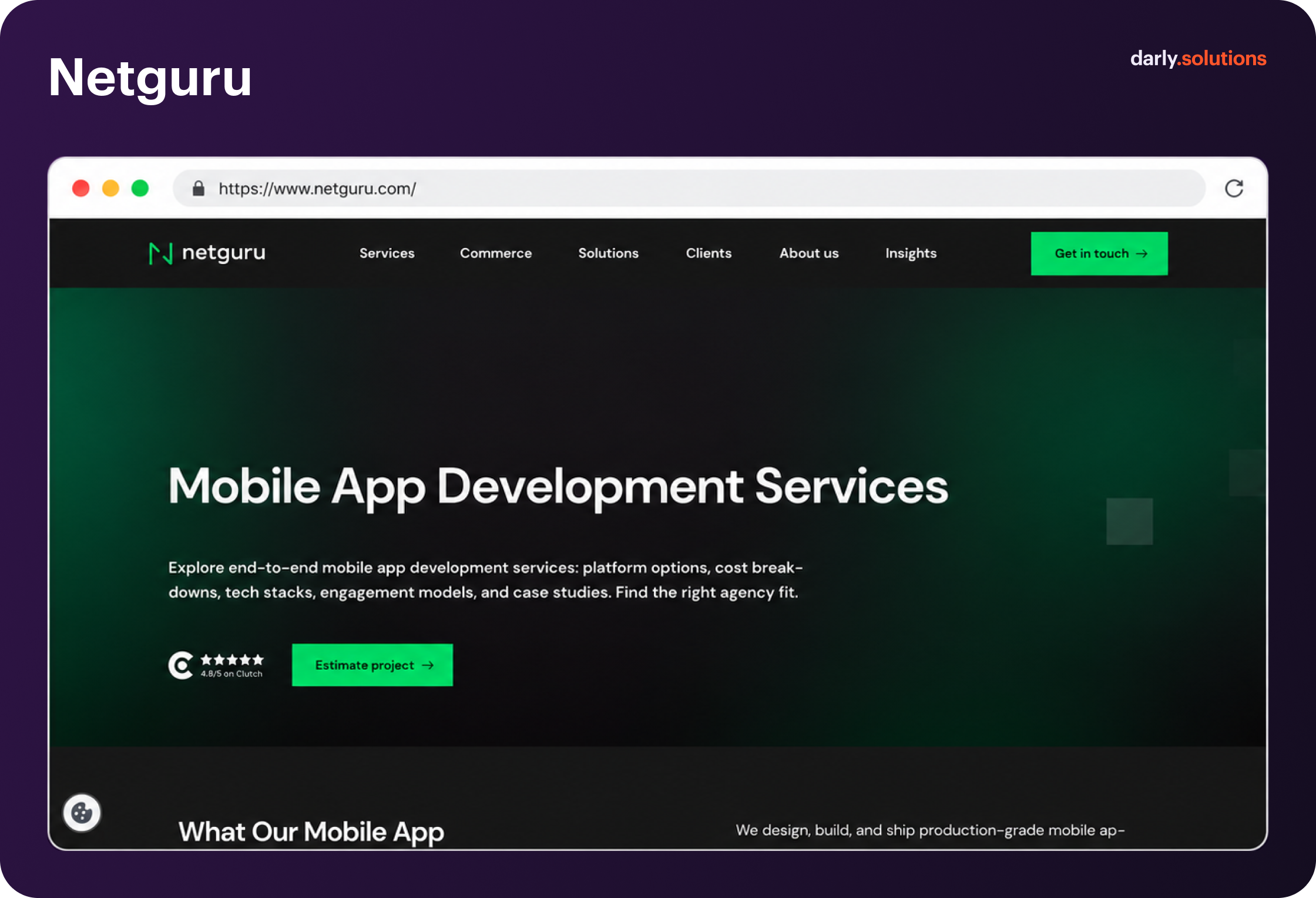
Company overview: Netguru is a mobile app development company that specializes in B2B, retail, and eCommerce solutions, as well as marketplaces.
Best for: Pre-seed and seed-stage B2B and retail/eCommerce startups.
Mobile expertise:
- Native: Swift, Objective-C, Kotlin, Java
- Cross-platform: Kotlin Multiplatform, Flutter, React Native
- Hybrid: Ionic
- PWA: HTML, CSS, JavaScript, Vue.js
- Wearables & IoT
Startup experience: Netguru has both built and scaled mobile apps — most of them cross-platform — for startups in retail, finance, healthcare, and eCommerce.
What stands out: Netguru is a rare development company that specializes in Kotlin Multiplatform. It’s also a certified B Corp, meaning it’s recognized for its sustainability impact.
Potential limitations: Netguru is a relatively large agency (400+ team members), which may not be ideal for you if you expect a small-business way of cooperating.
Ideal engagement: Kotlin Multiplatform retail or eCommerce mobile app development or scaling.
8. Appinventiv: Best for Under-One-Roof Tech Services
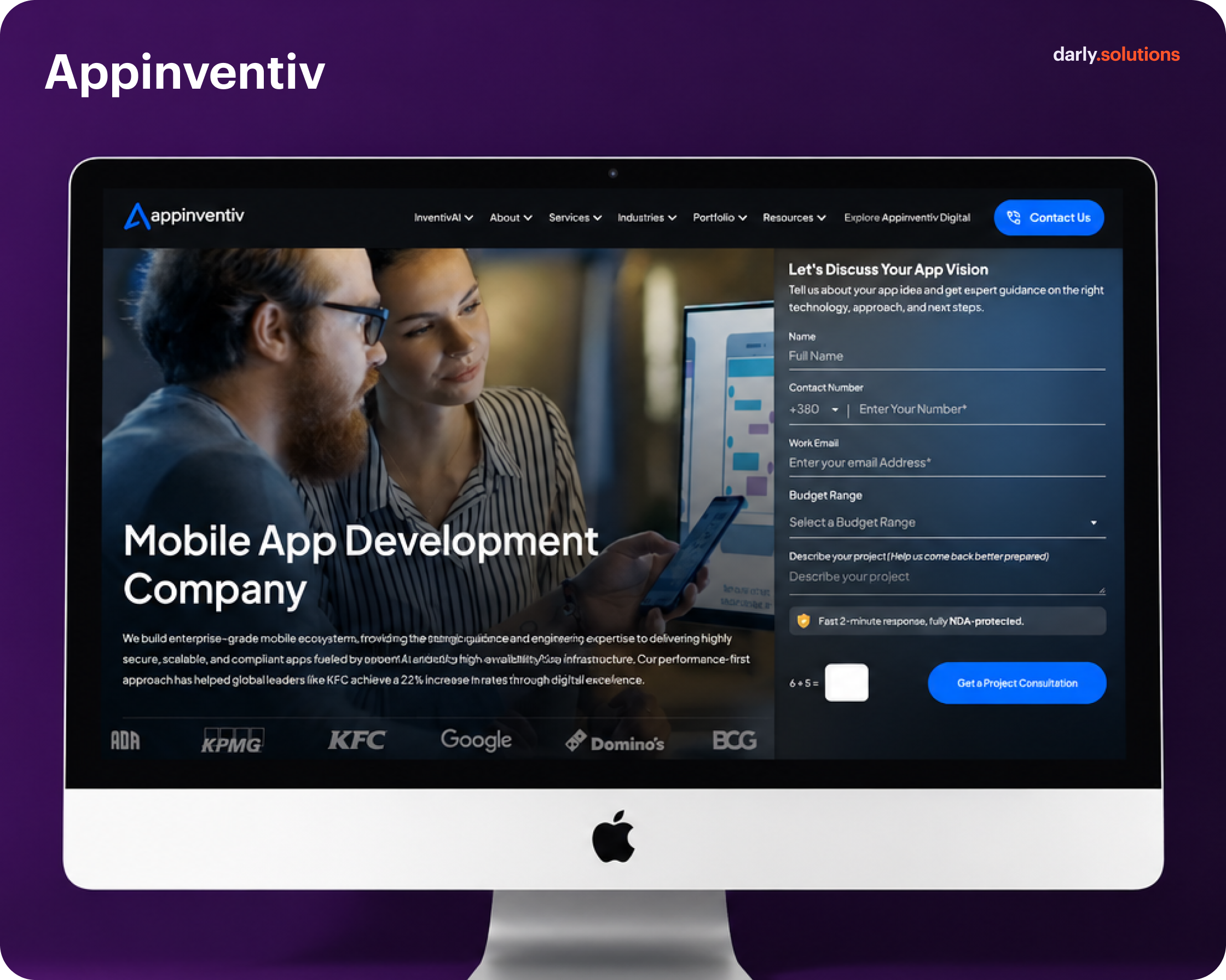
Company overview: Appinventiv is one of the larger mobile app development companies for startups on our list, with expertise in everything from AI/ML and IoT to digital transformation.
Best for: Pre-seed startups looking for a partner that offers all services under one roof.
Mobile expertise:
- Native: Swift, Objective-C, Kotlin, RxJava
- Cross-platform/hybrid: Flutter, React Native, Capacitor, .NET MAUI, Ionic
- PWAs: React, Angular, Vue.js, Webpack
Startup experience: Most of Appinventiv’s portfolio showcases the company’s experience with pre-seed fintech, travel, social media, wellness, and blockchain startups.
What stands out: Appinventiv is a juggernaut; it brings together 1,700+ specialists and covers 35+ industries.
Potential limitations: Time zone difference with India may lead to complications. The company’s size can also be both a blessing and a curse.
Ideal engagement: Development projects that require a polyvalent development partner.
9. Purrweb: Best for Limited-Scope MVP Development
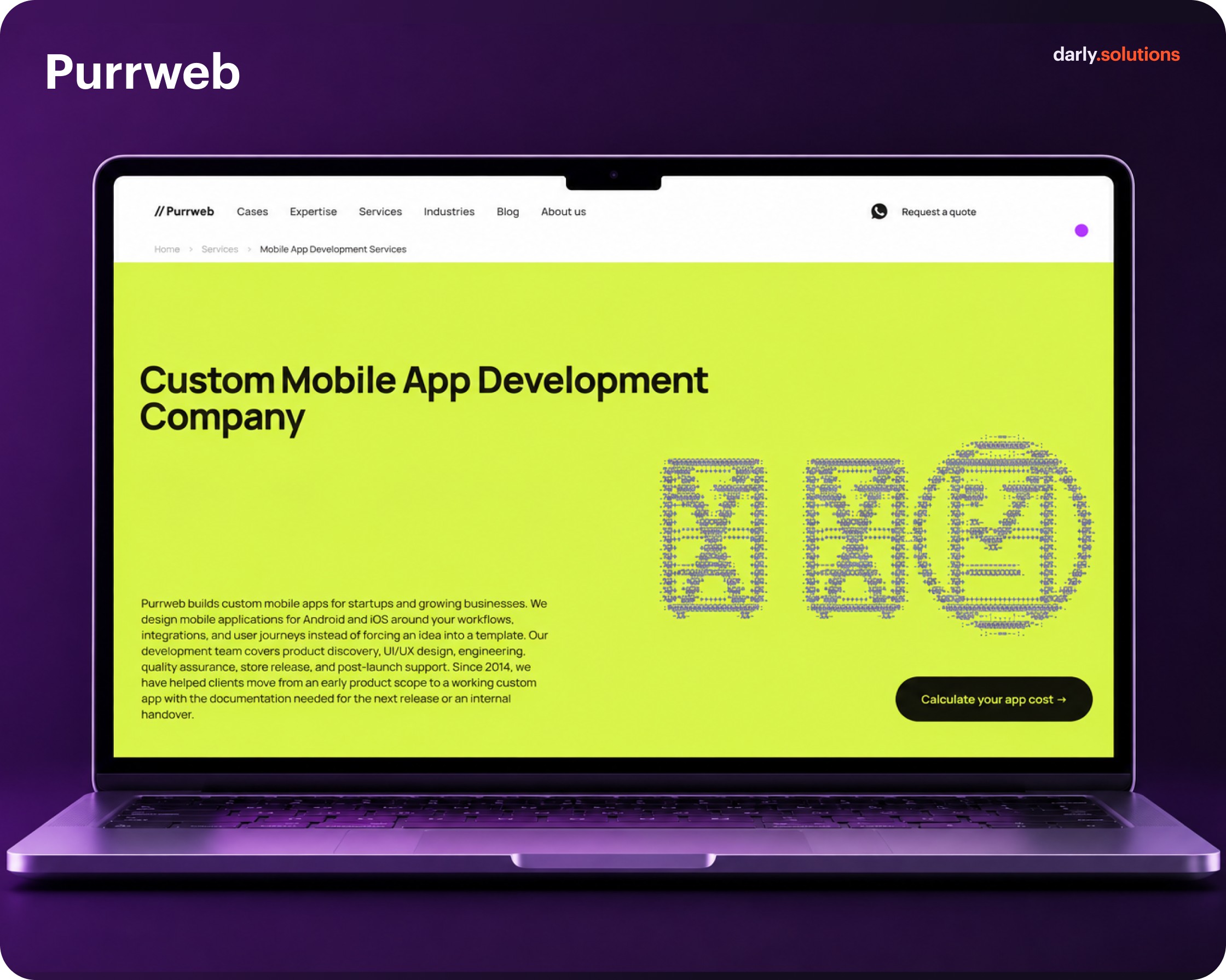
Company overview: Purrweb is a mobile app development agency for startups that can take on conceptualization, discovery, and UI/UX pre-development.
Best for: Pre-seed startups looking to build an investor- or consumer-ready app with a limited scope.
Mobile expertise:
- Native: Swift, Kotlin
- Cross-platform: React Native, Flutter, Kotlin Multiplatform
- PWA: WebRTC
- Mobile game development: React Native
- Smart TV app development: Apple tvOS, Android
- Apple CarPlay app development
Startup experience: Based on the portfolio, Purrweb’s primary verticals are social media, fintech, foodtech, and healthcare.
What stands out: According to Clutch, Purrweb works exclusively with small businesses (<$10 million).
Potential limitations: While Purrweb’s team can support and maintain the app, it doesn’t seem to have enough experience with rebuilding or scaling apps.
Ideal engagement: React Native game development or MVP development with a limited scope.
10. TechAhead: Best for Managed Team Services
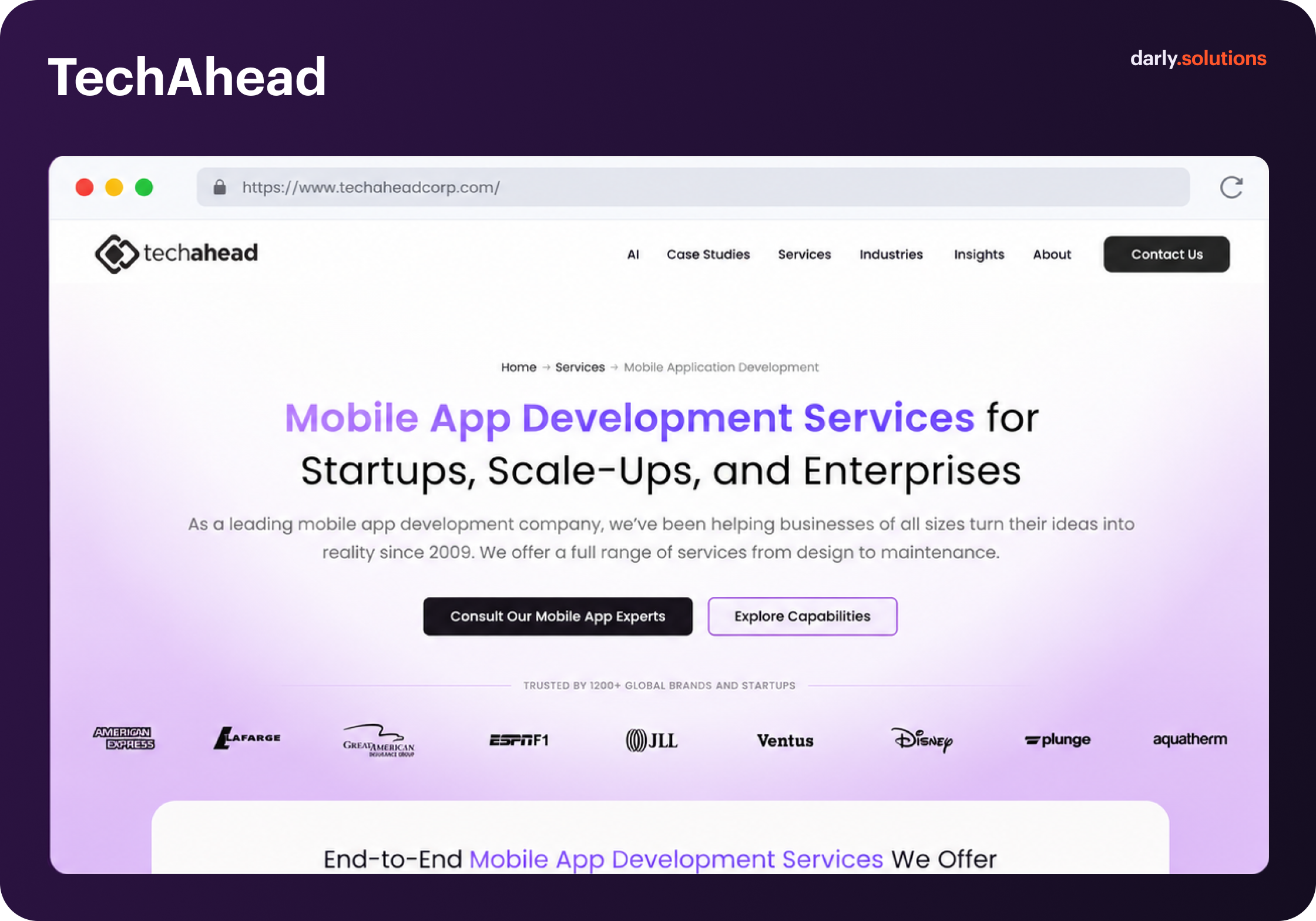
Company overview: TechAhead is a development company that specializes in enterprise AI, product engineering, physical AI, and cloud and data services.
Best for: Series B+ insurance, finance, or media startups that need to ramp up their engineering capacity.
Mobile expertise:
- Native: Kotlin, Java, Swift, Objective-C
- Cross-platform: Flutter, React Native
- Wearable app development
Startup experience: Most of TechAhead’s business comes from enterprises and mid-market businesses. That said, its portfolio does have some examples of startup projects involving AI/ML and IoT.
What stands out: TechAhead has a commendable track record in delivering AI/ML-powered mobile apps — and working with some of the largest names in insurance, finance, and media.
Potential limitations: The development team works from India, which can make for a big time zone difference.
Ideal engagement: Managed team for AI or IoT expertise; Global Capability Center services.
11. MindSea: Best for Onshore/Nearshore Healthtech Projects
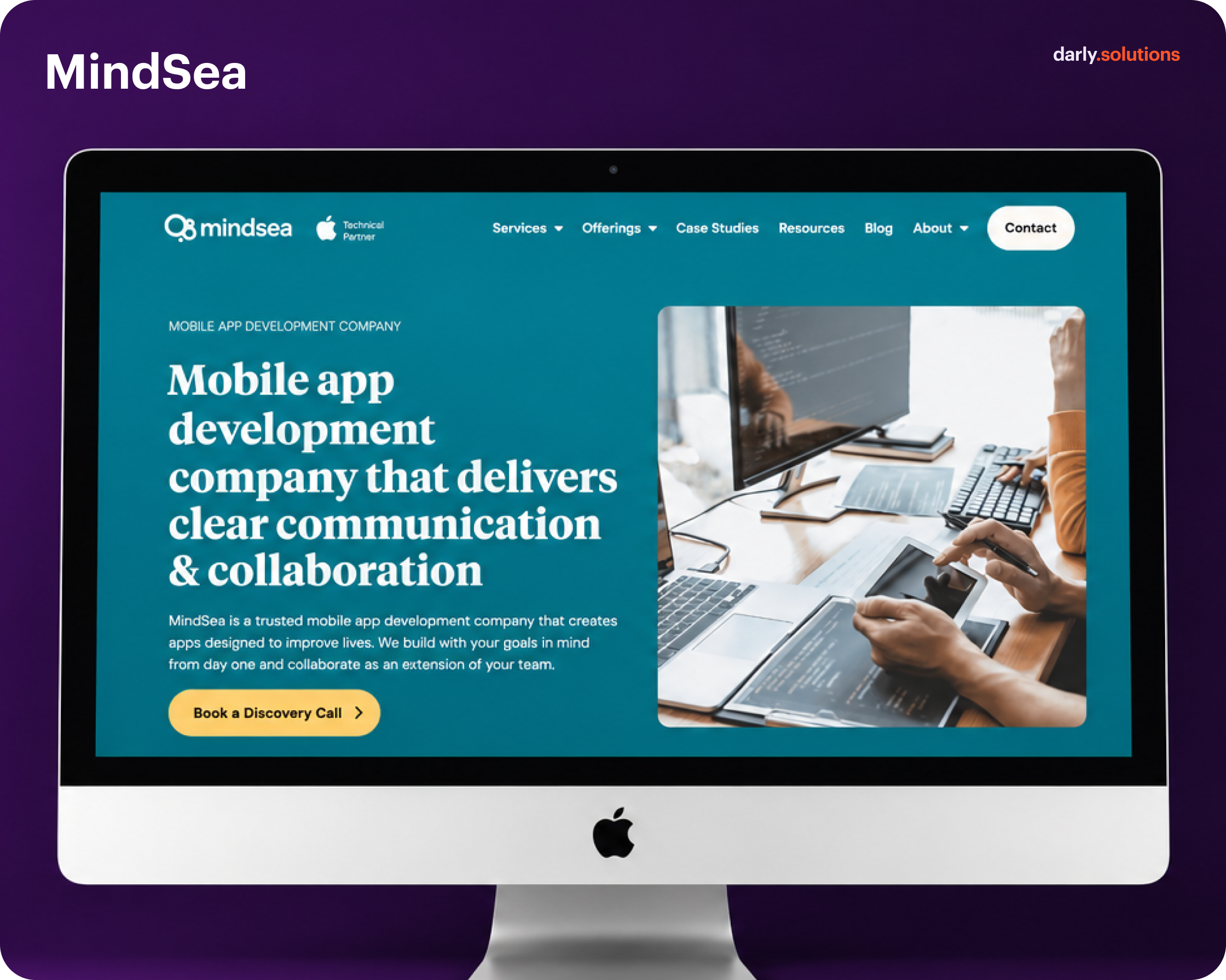
Company overview: Headquartered in Nova Scotia, MindSea is a development company that specializes in digital health solutions, including wearable apps.
Best for: Pre-seed or post-MVP healthcare and wellness startups looking for an onshore or nearshore partner.
Mobile expertise:
- Native: Swift, Kotlin
- Cross-platform: React Native
- Wearable & IoT app development
Startup experience: MindSea’s startup experience is laser-focused on healthcare and wellness products.
What stands out: MindSea has cultivated experience in health and healthcare verticals since 2007. The company is well-versed in compliance matters (HIPAA, PIPEDA, PIPA, GDPR).
Potential limitations: As a Canada-based company, MindSea tends to work with more expensive projects ($200,000–$999,999 for mobile app development).
Ideal engagement: Onshore or nearshore digital health MVP development or app rebuild.
12. Wve Labs: Best for Product Recovery or Relaunch
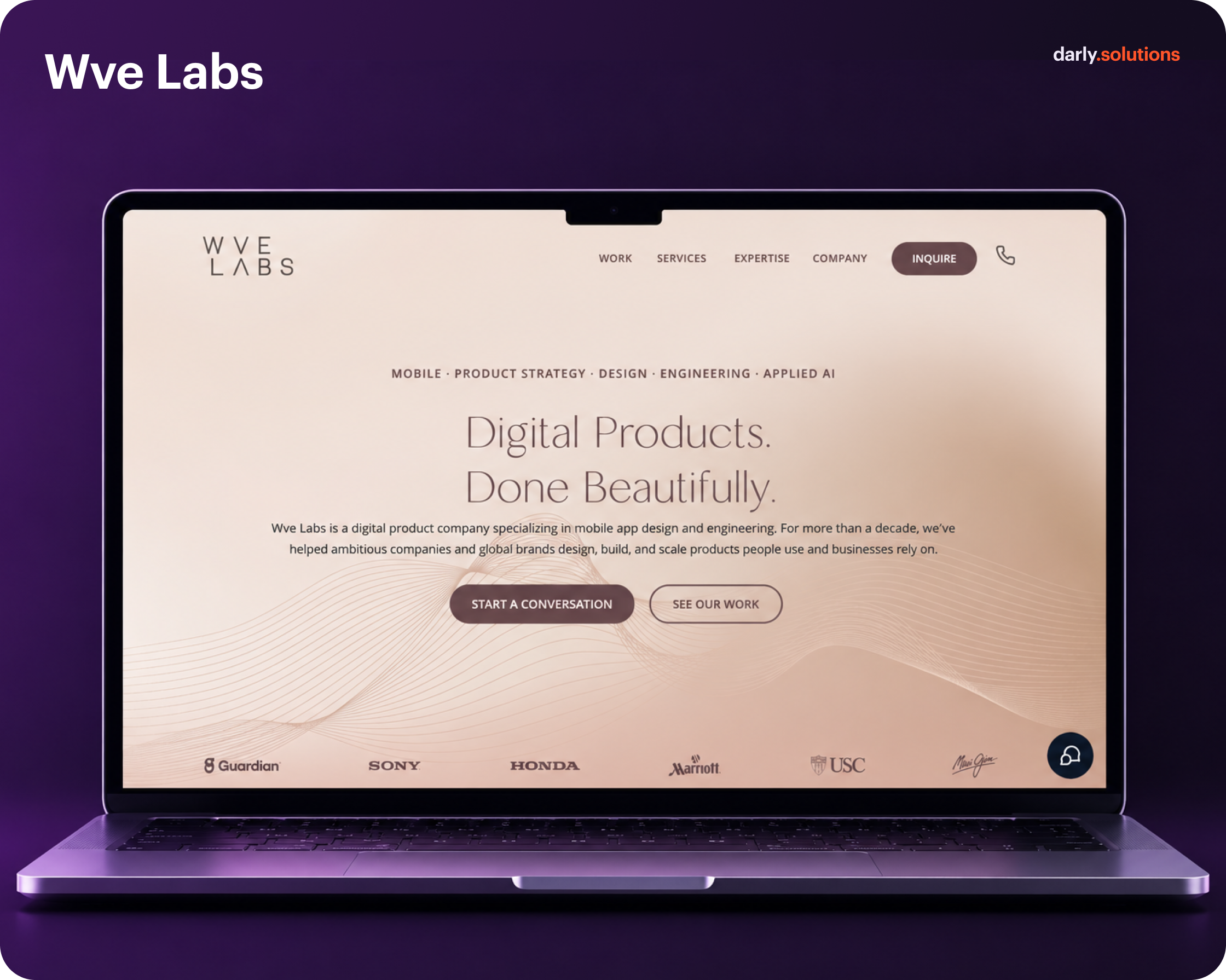
Company overview: Headquartered in Los Angeles, Wve Labs has been building mobile apps, developing brand identities, and rescuing projects since 2015.
Best for: Pre-seed startups recovering after a bad experience with a development partner or struggling to grow.
Mobile expertise:
- Native: Swift, Objective-C, Kotlin, Java
- Hybrid/cross-platform: Xamarin (C#), Flutter, Ionic, React, Apache Cordova
- Wearable app development
Startup experience: The bulk of Wve Labs’ experience lies in building hybrid AI-powered MVPs for social media, travel, real estate, entertainment, and wellness startups.
What stands out: Wve Labs offers targeted app redevelopment and relaunch services for failing or stalling mobile apps.
Potential limitations: Wve Labs works primarily with hybrid and native technologies.
Ideal engagement: Hybrid AI-powered MVP development; mobile app redevelopment or relaunch.
13. JetRockets: Best for a Ruby on Rails Tech Stack
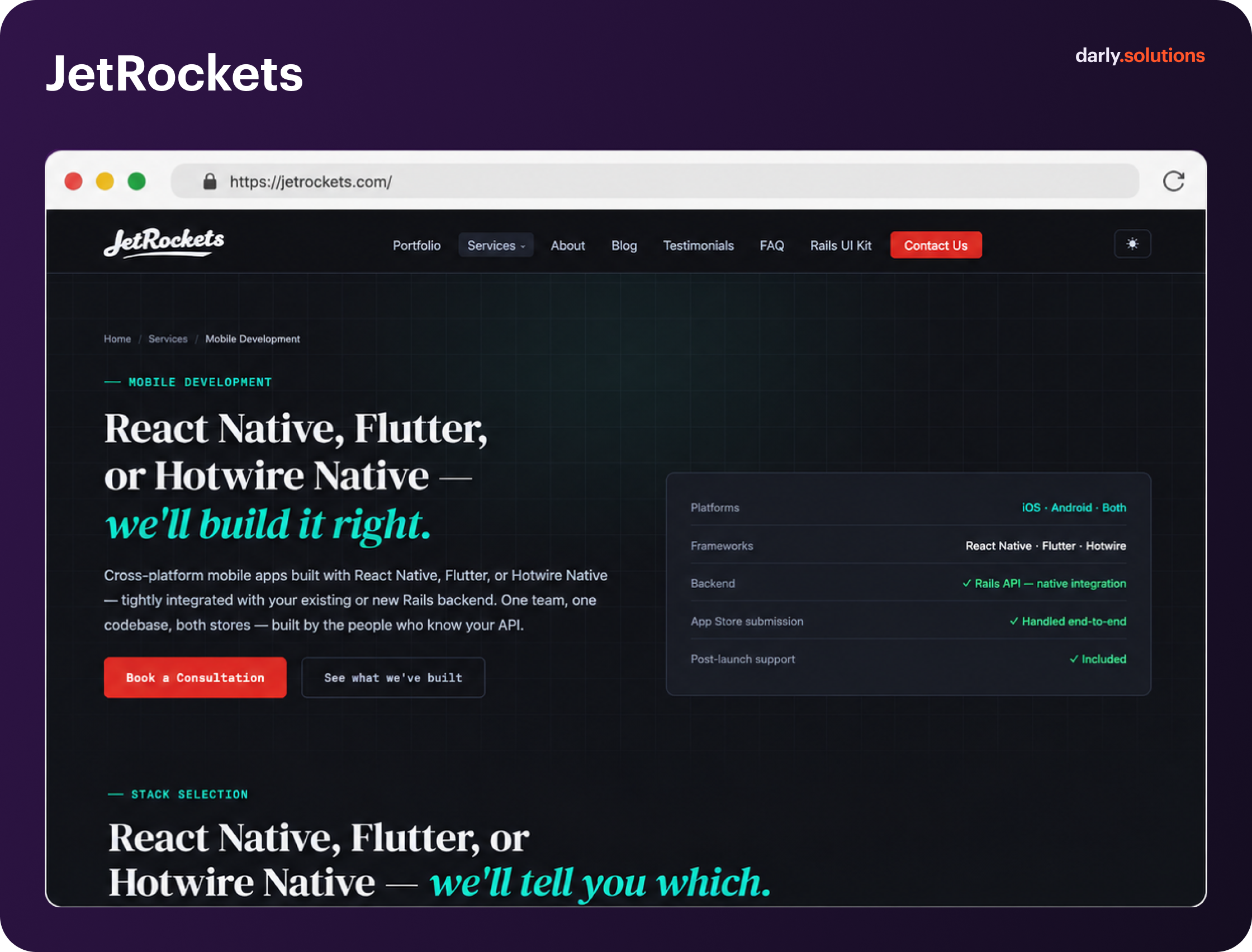
Company overview: Based in NYC, JetRockets is a Ruby on Rails development agency above all else. That said, its 50+ developers also build MVPs and mobile apps.
Best for: Seed-stage startups that need a mobile app for a Ruby on Rails backend.
Mobile expertise:
- Native: Swift, Kotlin
- Cross-platform: React Native, Flutter, Hotwire Native
Startup experience: Virtually every case study we’ve seen on its website concerns US-based startups.
What stands out: Ruby on Rails is JetRockets’ bread and butter; the agency can build mobile apps for existing Rails backends or handle everything in-house.
Potential limitations: While JetRockets has built native mobile apps, most of its experience lies in cross-platform mobile app development services for startups.
Ideal engagement: Cross-platform mobile app development with a Ruby on Rails backend.
14. Intellectsoft: Best for an AI/IoT Dedicated Team
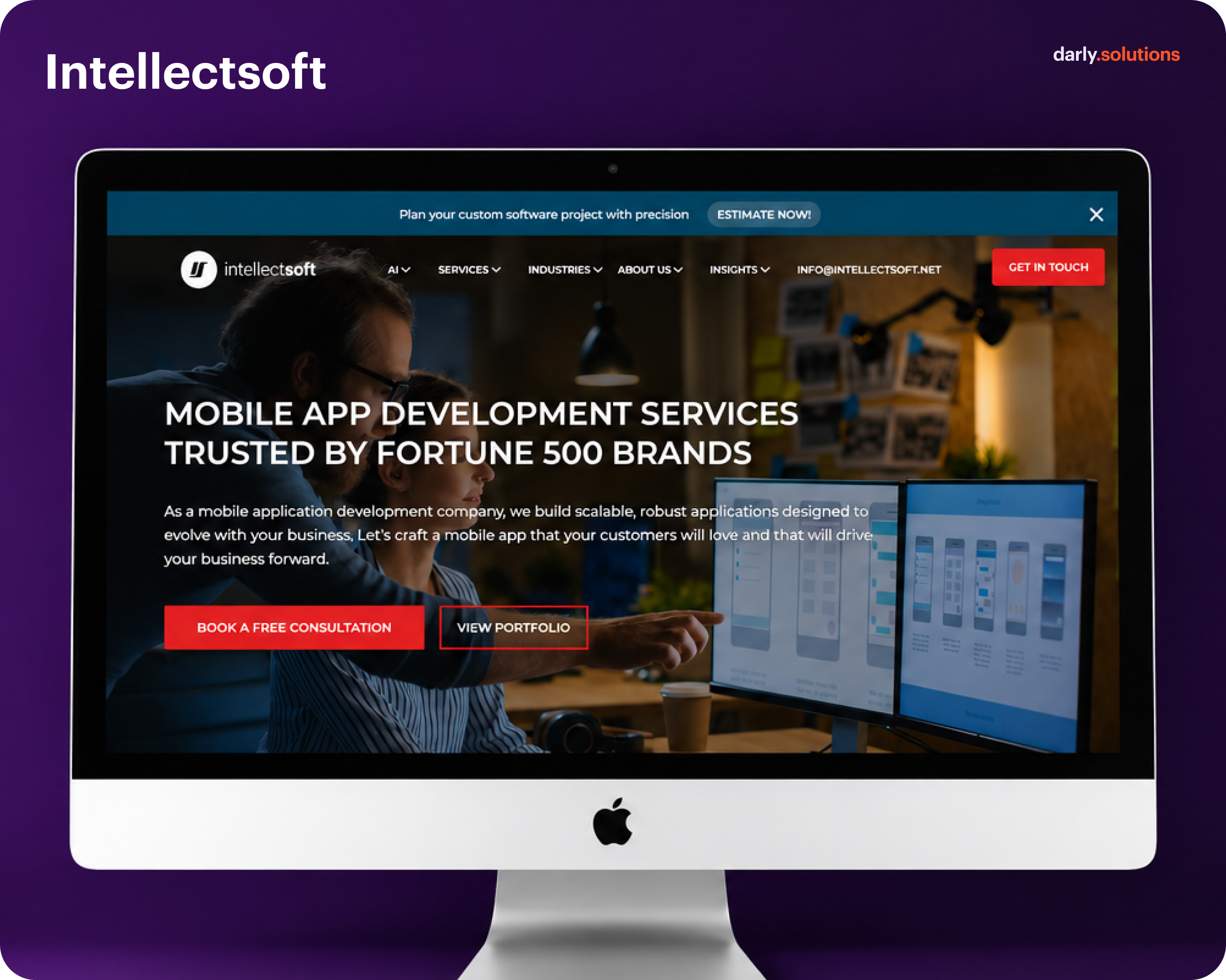
Company overview: Intellectsoft is a development and digital transformation partner with offices across seven countries.
Best for: Series B/C+ startups in need of a dedicated team.
Mobile expertise:
- Native
- Cross-platform
- PWA
- Wearable app development
Startup experience: Intellectsoft has developed mobile apps for startups in healthcare, social media, and wellness.
What stands out: Intellectsoft’s AI and IoT expertise is especially strong, while its presence in multiple markets can help you leverage local knowledge.
Potential limitations: The typical budget for an Intellectsoft mobile app project exceeds $200,000, as per Clutch data. So, it’s not among the most affordable mobile app development companies.
Ideal engagement: Dedicated team with AI/IoT expertise for post-Series A roadmap.
15. ScienceSoft: Best for Long-Term Post-Series A Partnerships

Company overview: Founded in 1989, ScienceSoft builds, scales, and maintains custom software, MVPs, web apps, and AI solutions along with mobile apps.
Best for: Series B/C+ startups in finance, investment, insurance, and medical industries.
Mobile expertise:
- Native: Java, Kotlin, Swift, Objective-C
- Cross-platform: React Native, Flutter, Xamarin
- Hybrid: Cordova, Ionic
- PWA
- Smartwatch app development
- Smart TV apps
- Apps for smart glasses and AR/VR wearables
Startup experience: ScienceSoft has quite a track record in building and revamping mobile apps for logistics, healthcare, fitness, eCommerce, and fintech startups.
What stands out: Most of ScienceSoft’s business comes from clients in financial services and the medical industry. It also has multiple certifications (ISO 9001, ISO 27001, ISO 27701, ISO 13485).
Potential limitations: ScienceSoft tends to work primarily with midmarket companies and large enterprises, according to its Clutch profile.
Ideal engagement: Long-term technology partnership post-Series A.
16. JPLoft: Best for Mobile Game Development
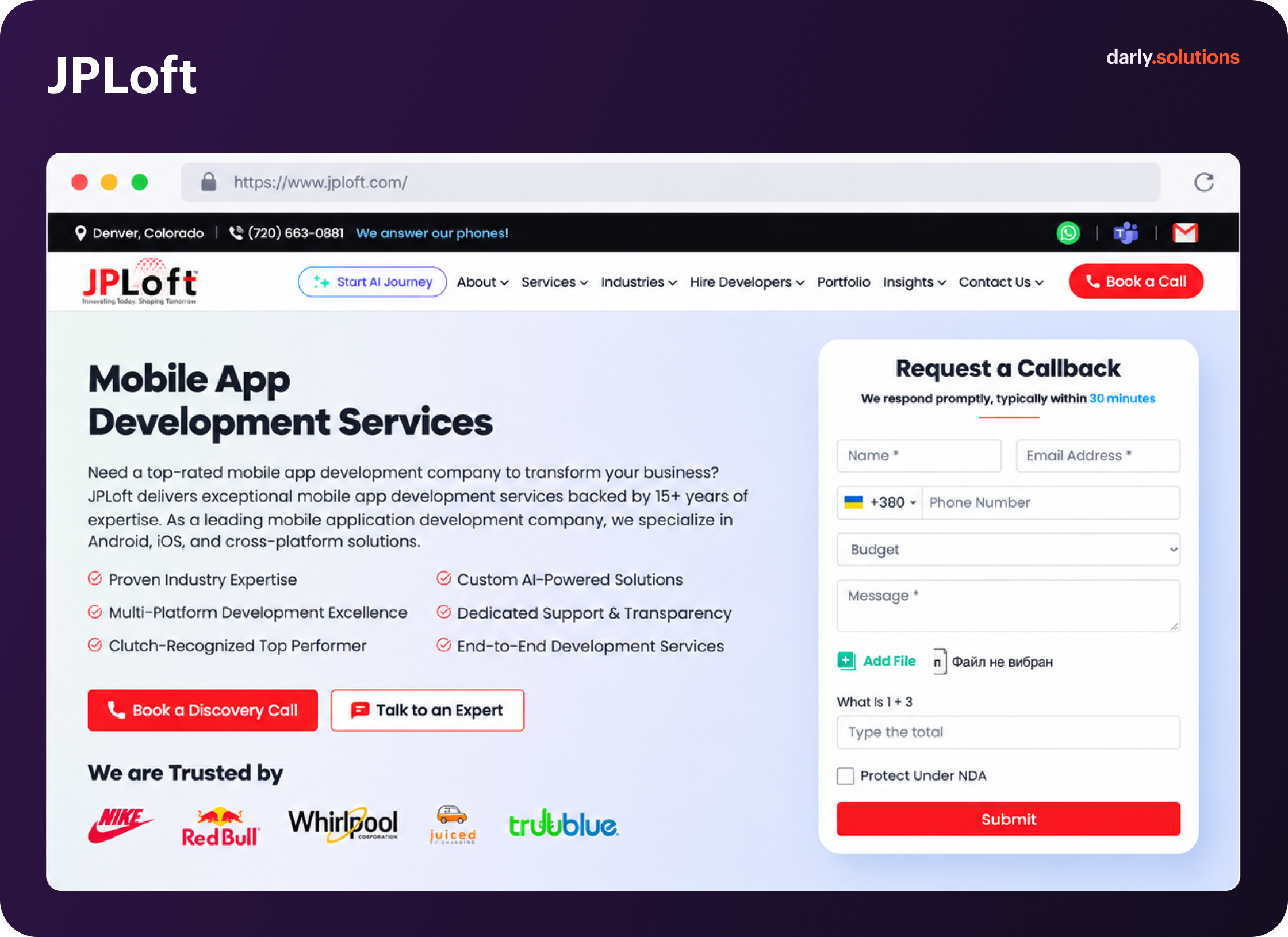
Company overview: JPLoft is a development company that works on mobile apps, web apps, custom software, AI products, and blockchain solutions.
Best for: Pre-seed startups in media and entertainment or education.
Mobile expertise:
- Native: Swift, Kotlin
- Cross-platform: Flutter, React Native
- Hybrid: Ionic, Cordova
- PWA
- Wearable app development
- 2D/3D mobile game development (including Unity/Unreal games)
Startup experience: JPLoft has primarily built MVPs for startups in media and entertainment, marketplaces, delivery, and education.
What stands out: JPLoft is one of the app development companies for small businesses that actually gets over half of its business (60%) from this client segment. The company has a commendable track record in building mobile games with AI, blockchain, and AR/VR features.
Potential limitations: JPLoft isn’t as experienced in IoT development as it is in mobile game development.
Ideal engagement: 2D/3D and AR/VR mobile game development for edtech and entertainment startups.
17. ArcTouch: Best for Connected Apps & Accessibility
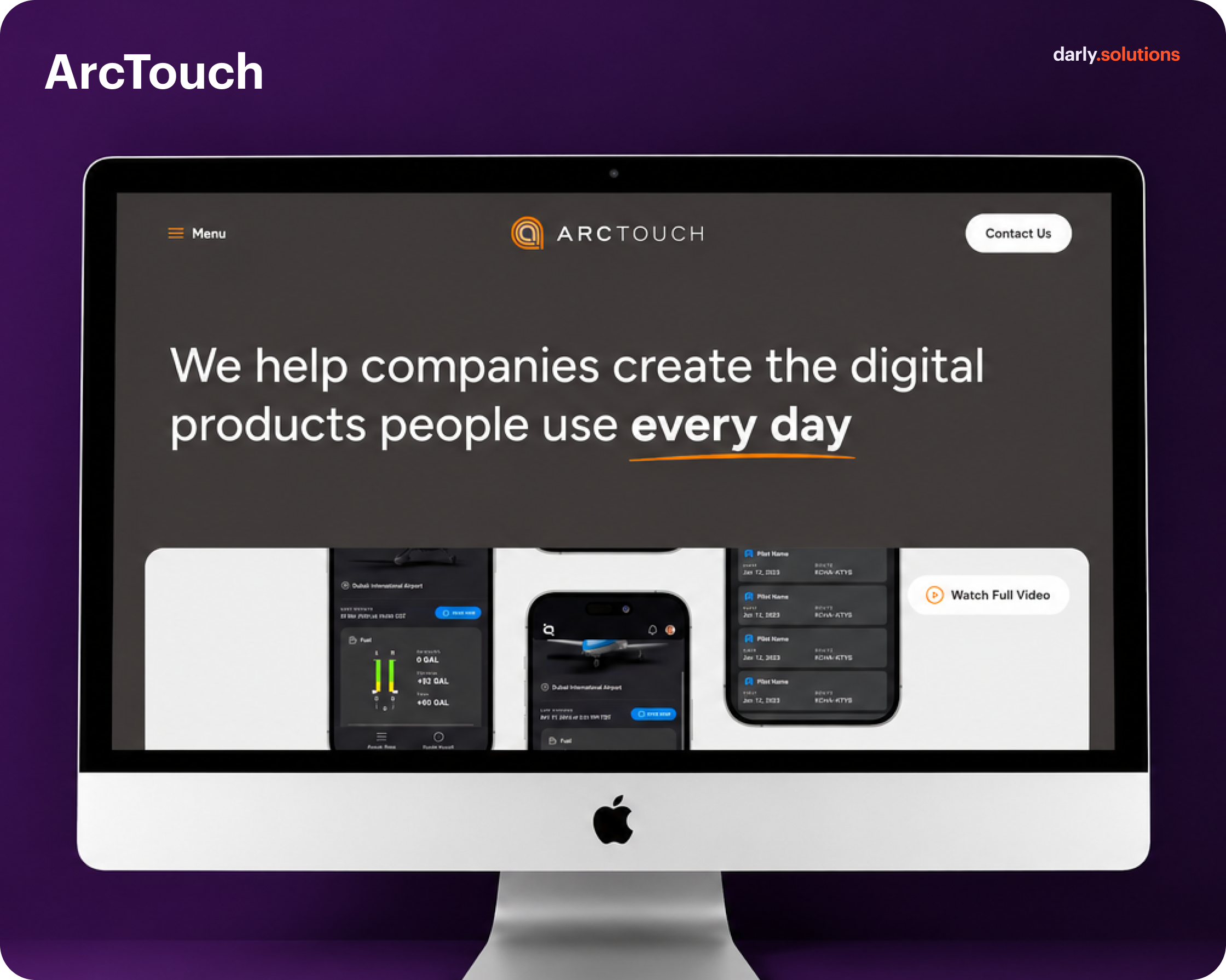
Company overview: ArcTouch found its beginnings in Silicon Valley in 2008 — and it started out as a mobile app development company in particular.
Best for: Pre-seed startups looking to build a connected mobile app or one with strict accessibility requirements
Mobile expertise:
- Native: Swift, Kotlin, Objective-C, Java
- Cross-platform: Flutter, React, .NET/MAUI, Xamarin
- Smart TV and wearable app development
- Connected mobile app development (BLE, NFC, Matter, MQTT, etc.)
- Accessible design and development
Startup experience: Startups don’t represent the bulk of ArcTouch’s clientele, but the company has delivered apps — including connected and AR apps — for them.
What stands out: ArcTouch focuses on building minimum lovable products (MLPs) for its clients. It’s also a true expert in connected apps and accessibility standards.
Potential limitations: Engagement models are limited to ArcTouch-led projects and team augmentation.
Ideal engagement: ArcTouch-led projects for connected mobile app development.
18. 10Pearls: Best for Series B/C+ AI Products
Company overview: 10Pearls is a technology partner 1,400+ professionals strong, with offices in 10 countries across four continents.
Best for: Series B/C+ startups with AI SaaS products.
Mobile expertise:
- Native: Swift, Kotlin, Objective-C, Java, Dart
- Cross-platform/hybrid: Flutter, React, Xamarin, Ionic, Apache Cordova
- Mobile game development
- Wearable app development
Startup experience: 10Pearls does take on advanced projects involving startups (case in point: this identity protection platform), but they are few in the portfolio.
What stands out: 10Pearls’ experience in AI-powered products, data services, and privacy and security is quite strong. The company also has a commendable partnership network.
Potential limitations: Overall, 10Pearls has a somewhat limited experience with newly founded startups.
Ideal engagement: AI product development and data engineering for AI-driven SaaS startups.
19. Itransition: Best for Data-Driven Projects
Company overview: Itransition is a digital transformation and product engineering firm that’s served 800+ enterprises and startups alike since 1998.
Best for: Post-Series A data-driven startups in highly regulated industries (automotive, finance, healthcare, insurance).
Mobile expertise:
- Native: Swift, Objective-C, Kotlin, Java
- Cross-platform: React Native, Flutter, .NET MAUI, Kotlin Multiplatform
- Hybrid/PWA: Angular, React, Vue, HTML, CSS, TypeScript, JavaScript
- Wearable app development
Startup experience: Itransition has a well-documented track record in delivering innovative solutions for startups, including native mobile apps for a vehicle data platform and AR apps.
What stands out: Itransition is an expert in Microsoft technologies and ecosystem — and it’s an official Microsoft Solutions partner. Plus, it’s ISO 9001 and ISO 27001 certified.
Potential limitations: When it comes to mobile app development, the average Itransition project cost exceeds $200,000.
Ideal engagement: Dedicated team or managed services for data-driven products’ post-Series A roadmap.
20. Empat: Best for Closing In-House Expertise Gaps
Company overview: Founded in 2013, Empat is a full-cycle development partner that works on mobile and web apps, AI products, and enterprise software.
Best for: Seed-stage fintech and healthtech startups that need to quickly close a talent gap.
Mobile expertise:
- Native: Swift, Kotlin
- Cross-platform: React Native, Flutter
Startup experience: Empat’s portfolio is full of case studies involving startups, including in healthtech, social media, and fintech.
What stands out: Mobile app development is Empat’s number one service line on Clutch. The company’s AI/ML expertise is strong, and most of its work focuses on these two technologies.
Potential limitations: Apart from AI/ML and data services, Empat doesn’t have other strong domains of technical expertise (e.g., IoT, blockchain).
Ideal engagement: IT outstaffing or staff augmentation for AI expertise; consulting and CTO-as-a-service for strategic roadmap decisions.
How to Choose a Mobile App Development Company for Your Startup
We’ve selected only 20 mobile app development companies for startups. As of writing, Clutch lists 54,000+ mobile app development companies. So, yes: taking your pick won’t be easy.
Here’s what you should consider if you don’t want to regret your choice.
Define Your Startup Stage & Product Goals
First, you need to know what you’re looking for. If you’re just starting out, you’ll need product discovery and maybe PoC development services for your idea. If you already have Series A funding locked and loaded, you need to ship new features without stalling.
Here’s how product goals vary between startup stages:
Look for Relevant Startup & MVP Experience
Building a mobile app for a multinational corporation and a startup are two very different projects. Startups have a limited runway. They have to validate their assumptions. They have to prioritize — hard — which features make it into the MVP.
So, make sure your prospective mobile development partner actually understands what it means to work with a startup. Ask the reps for examples of actual mobile apps that they delivered for startups from discovery to launch and scaling.
Compare Native, Hybrid & Cross-Platform Expertise
Native apps have to be built from scratch for each platform, but nothing can beat native apps when it comes to performance and UX. Cross-platform and hybrid apps tend to be more cost-efficient, but performance and UX are the tradeoffs.
Ultimately, which approach — and which specific technology — is better for your product depends, well, on the product. So, consider your performance requirements, roadmap, features, and, of course, your team’s expertise.
Evaluate Product Discovery & UX Capabilities
A good development partner doesn’t just have the best app developers for startups; it offers the full range of auxiliary services you may need. Those can include:
- Requirements discovery
- User research
- Prototyping
- Feature prioritization
- Idea validation
If you’re moving past the MVP or scaling, pay attention to services like product audit, strategy and tech consulting, CTO-as-a-service, and product modernization.
Understand Team Structure & Communication
Check how the team communicates with you during pre-sales. Do they ask questions about your goals and users before talking about tech stack and timelines? (They should.) Do they explain tradeoffs between your options? (Again, they should.)
As for the team structure, think carefully about which parts of the job you’ll handle in-house and which ones you’ll hand over. Do you lack a data engineer to build the mobile app? Go for team augmentation. Need a partner to build your product from start to finish? Hire a whole team.
Verify Code Ownership & Intellectual Property
As we’ve covered in our project takeover guide, a reliable development partner always hands over full access to repositories, infrastructure accounts, and licenses to the client.
So, ask the prospective partners how they handle this handover head-on. Make sure you’re clear on the source code ownership from the very start, too — and it’s enshrined in the contract.
Evaluate Post-Launch Support
Once your mobile app goes live, your work is just beginning. If you want your partner to handle it, discuss their post-launch services, as well as the logistics of it (pricing model, what’s included, etc.), before signing the contract.
Post-launch services typically include:
- Ongoing maintenance
- Bug fixes
- Security updates
- App analytics
- User support
- Iterative development
- Feature releases
How Much Does It Cost to Develop a Mobile App for a Startup?
Mobile app development can cost $15,000 just as easily as $200,000+, depending on your partner’s rates, the expertise you need, and your project’s complexity. The latter hinges on factors like:
- Number of platforms and type of app (native/cross-platform/hybrid)
- Features, their number, and complexity
- Number and complexity of screens and user flows
- Technologies used
- Business logic complexity
- Third-party integration needed
- UI/UX research and design requirements
- Security and regulatory requirements
- QA and testing needed
These factors also determine the team composition and the project duration.
Note: Remember to factor in discovery and post-launch support services into the TCO if applicable.
How Long Does It Take to Build a Startup Mobile App?
In a similar vein, having the initial MVP ready for launch won’t take nearly as much time as building a mature product. How long your project can take depends on:
- Pre-development work needed: discovery, validation, PoC, design
- Number and complexity of features
- Backend and integration complexity
- The number of platforms and approach
- Security and regulatory requirements
- Testing and launch requirements
Should a Startup Hire an Agency, an In-House Team, or Freelancers?
Of course, there’s more than one way to hire mobile app developers for a startup. You can build an in-house team. Or, you can turn to freelancers instead of an agency.
Not sure which approach to choose? Here are the key tradeoffs for each:
Take a long, hard look at your resources, runway, existing internal expertise, and long-term roadmap before making the decision. Consider your delivery requirements, too.
10 Common Mistakes Startups Make When Choosing an App Development Company
We’d be amiss if we didn’t mention the mistakes startups often make when picking their mobile app development partners. So, here’s our top 10 to avoid:
- Picking the lowest bidder without considering other factors
- Overlooking discovery, validation, and UI/UX design services
- Skipping the IP and code ownership discussion
- Picking the development approach or tech stack based on trends, not actual needs
- Not checking the vendor’s portfolio and independently verifying the references
- Accepting vague responses when discussing the scope, deliverables, or milestones
- Overlooking post-launch services when comparing offers
- Not discussing the documentation and handover processes
- Underestimating the importance of clear communication
- Treating the company as only coders instead of technology and strategy partners
So, Which Development Agency Should You Pick?
Of course, only you can decide which company is best for your projects. We can only point you in the right direction while you’re browsing mobile app development companies for startups.
Here’s your recap of our top 20:


FAQ
Start by looking through case studies and the company’s reviews on Clutch, GoodFirms, and other platforms. Hold technical interviews; make sure estimates and contractual terms are clear, detailed, and transparent.
Identify your target users, the problem your app will be solving, and its core features you want to implement. Determine your business goals, budget assumptions, and constraints, regulatory or otherwise.
Absolutely. Many mobile app development companies offer product discovery services and technical feasibility assessments for this very purpose. That said, no company can guarantee your product will actually reach product-market fit.
It really depends on your in-house expertise and UI/performance requirements. Overall, React Native tends to be best for apps that share logic with existing web apps, while Flutter is better for animation-heavy apps that need a pixel-perfect UI.
If you’re certain you’re operating on the right assumptions, build both to reach as many users as possible. Start with a single platform if you need to validate and refine your idea first.
Check the contract for the scope, deliverables, milestones, payment terms, change request handling, security commitments, IP and code ownership rights, and post-launch services.
You’ll need two things before everything else: 1) thorough documentation, and 2) full access to all artifacts (e.g., repositories) and accounts (e.g., cloud, third-party licenses).
Of course. However, you’ll need thorough documentation and admin-level access to all assets and accounts to make the transition smooth.
An app development company focuses on delivering a working app. A product development agency also takes on product discovery, strategy, and iterative development. That said, many vendors offer both types of services these days.
Related articles


Connect with us

We are a tech partner that delivers ingenious digital solutions, engineering and vertical services for industry leaders powered by vetted talents.

